Information Security · Quality · Service Management
Trust, Compliance & Information Security
At Innova Wide, we treat security, quality, and governance as part of the project lifecycle from analysis and design through launch and support. Technical and operational controls are defined according to the nature of the solution, data sensitivity, hosting environment, client requirements, and service scope.
Certifications Supporting Quality, Information Security, and Service Continuity
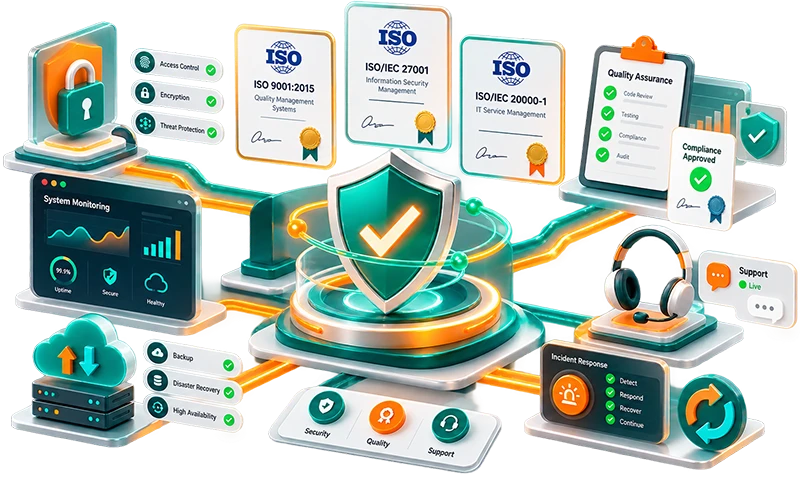
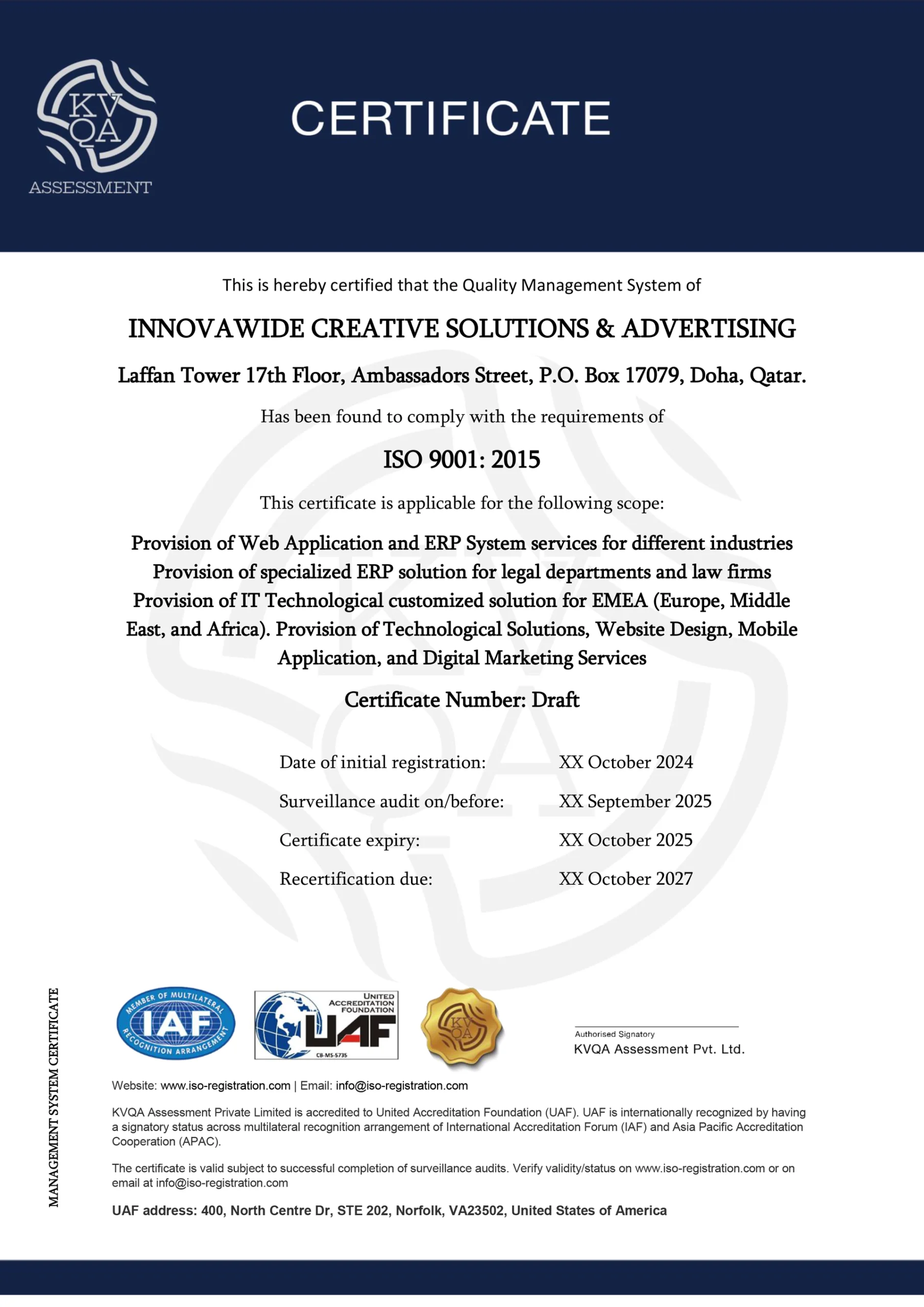
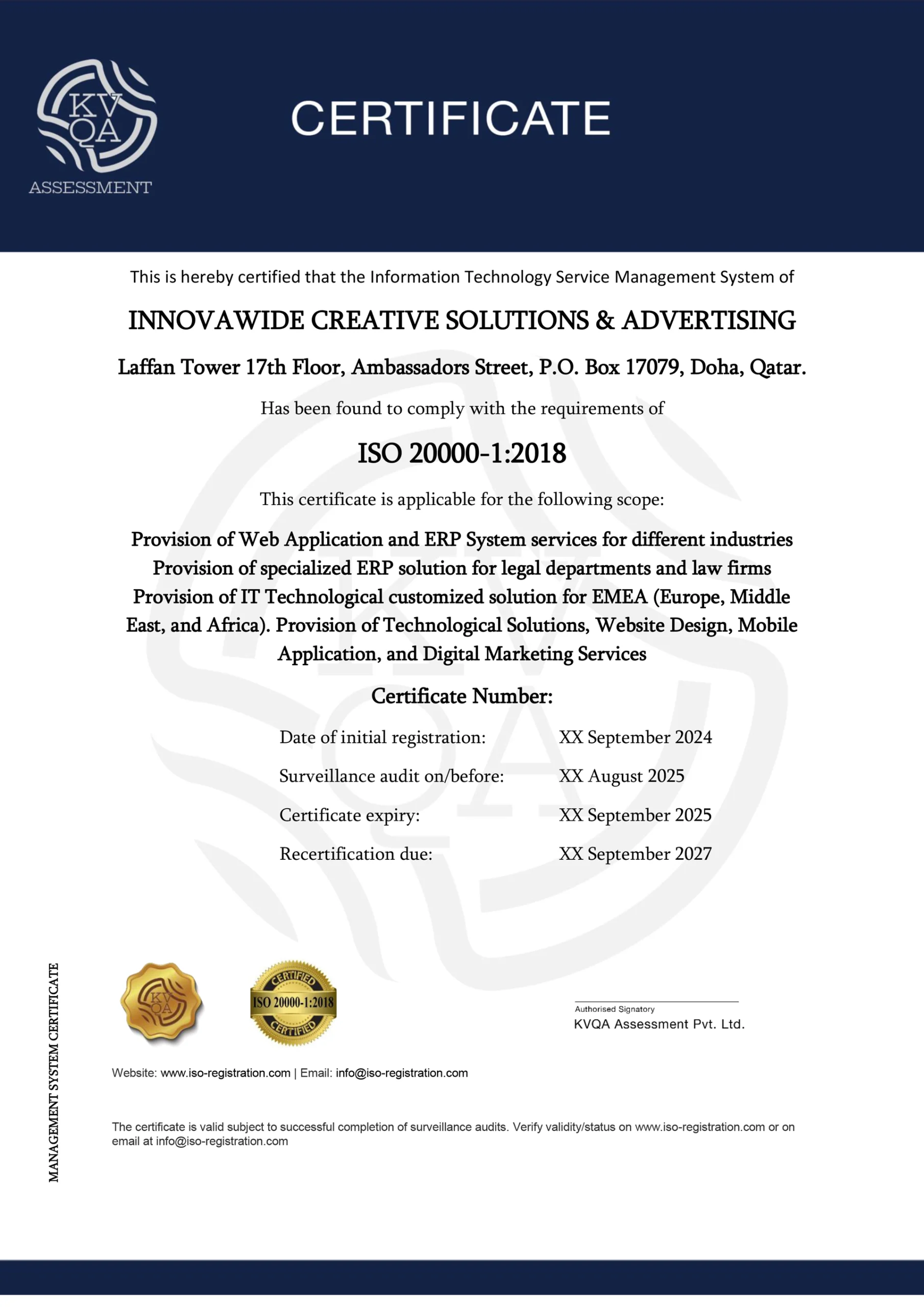
Innova Wide’s certifications support an organized approach to quality management, information protection, and IT service management. Practical application within each project remains linked to its technical and operational scope and agreed requirements.
Quality Management
ISO 9001:2015
Quality Management Systems
Service Management
ISO/IEC 20000-1:2018
IT Service Management
Information Security
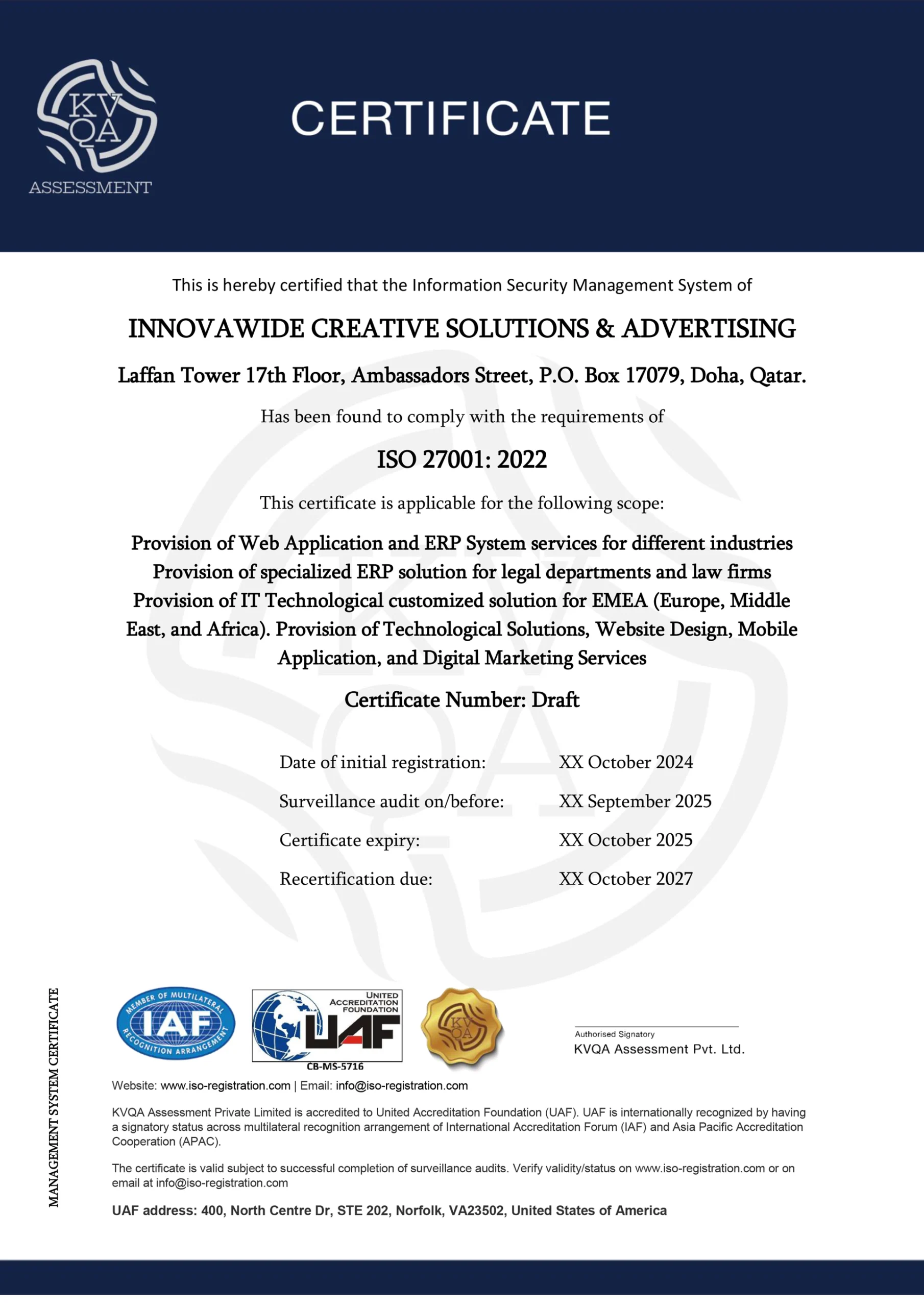
ISO/IEC 27001:2022
Information Security Management
Trust by Design
We Balance Protection, Usability, and Operational Continuity
There is no single security model that fits every project. We therefore begin by understanding the data, users, integrations, and risks, then define appropriate controls instead of adding security as a separate final stage.
Security from the Design Stage
Assess protection, permissions, and integration requirements within the design from the beginning.
Quality Through Processes
Clear review and testing stages reduce errors and improve solution readiness before launch.
Role-Based Controlled Access
Design roles and permissions in line with users and their responsibilities within the solution.
Operational Continuity
Consider backup, continuity, and support according to the architecture and service agreement.
Traceability
Support traceability and logs where they are part of system capabilities or project scope.
Continuous Improvement
Use feedback and operational data to identify opportunities for later improvement and development.
Technical & Operational Controls
Eight Areas We Review According to the Nature of the Project
The following areas represent a general practical framework. The level of implementation and detail varies from one solution to another according to the environment and approved requirements.
Access & Permission Management
Define roles and access levels and reduce unnecessary permissions according to user needs.
Logging & Traceability
Record important activities and changes in systems that support this to facilitate review and follow-up.
Data Protection
Select appropriate controls for storing, transferring, and processing data according to its sensitivity and project scope.
Backup & Continuity
Define backup, recovery, and service continuity mechanisms in line with the architecture and service agreement.
Testing & Quality Assurance
Test functionality, usability, compatibility, performance, and relevant technical aspects before launch.
Support & Service Management
Clear support, escalation, follow-up, and training channels according to the agreed service and plan.
Change & Release Management
Organize changes, releases, and reviews to reduce the impact of change on users and operations.
Continuous Improvement
Review usage, feedback, and performance to identify development and improvement opportunities after launch.
Trust Across the Project Lifecycle
Controls Evolve with Each Delivery Stage
We connect quality and security decisions to work stages so they remain actionable and reviewable rather than separate requirements outside the project.
01
Assessment
Understand data, users, integrations, operational requirements, and key risks.
02
Design
Include permissions, controls, and quality standards in the architecture and user experience.
03
Build
Build the solution according to approved development, release management, and review standards.
04
Testing
Test functions, integrations, performance, and quality before moving to launch.
05
Launch
Manage deployment, handover, training, and operational readiness according to the project plan.
06
Support & Improvement
Monitor service, feedback, changes, and improvement opportunities according to support scope.
Do You Have Specific Security, Quality, or Hosting Requirements?
Share your project requirements, data characteristics, and operating environment, and we will explain the controls and delivery options that can be included within scope.