
Companies & Groups
Lawmax for Corporate Legal Affairs Management
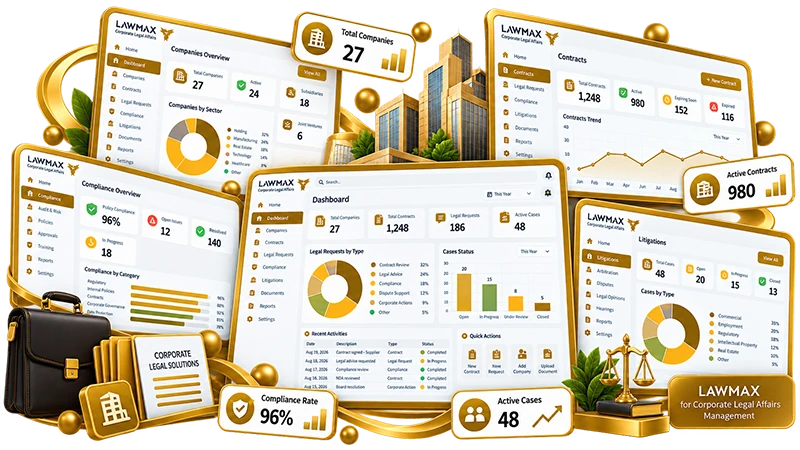
Lawmax brings cases, contracts, licences, powers of attorney, consultations, and requests into one platform, giving the legal department centralized visibility and precise operational tools across the parent company and its subsidiaries.
Why LAWMAX
From the Daily Challenge to One System That Solves It
The Challenge
Cases, contracts, licences, powers of attorney, and requests are distributed across multiple departments and subsidiaries, delaying updates and making it difficult for the General Counsel and senior management to form a unified legal view.
-
01
A Question from Daily Work
What Work Requires Follow-Up Today?
Answered by Main Interface ModuleStart Your Day with Priorities, Not by Searching for Updates -
02
A Question from Daily Work
What Is the Status of Each Case Now?
Answered by Litigation ModuleTurn every company case into one unified file instead of scattered notes across departments. -
03
A Question from Daily Work
Which Licences or Powers of Attorney Will Expire Soon?
Answered by Licences & Powers of Attorney ModuleMonitor representation authorities and company licences before they become an operational obstacle. -
04
A Question from Daily Work
What Previous Consultations Exist on a Similar Matter?
Answered by Recommendations & Consultations ModuleTurn every consultation into a clear approval path and a knowledge asset for the company. -
05
A Question from Daily Work
What Is the Volume of Open and Closed Cases?
Answered by Various ReportsTurn legal department data into measurable decisions.
The Solution
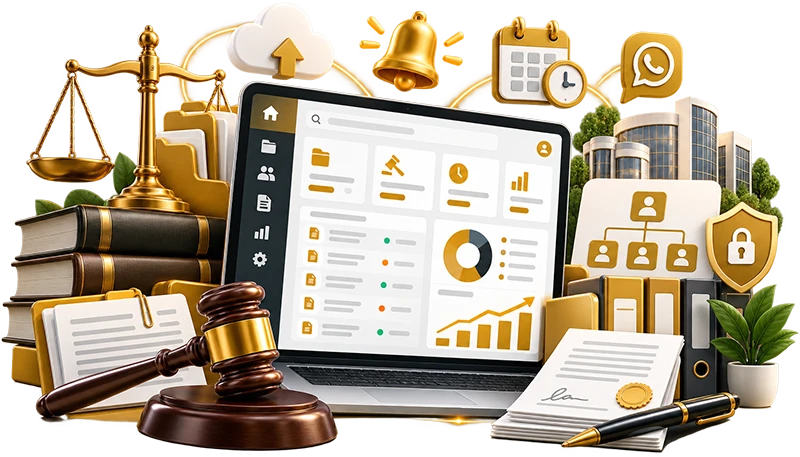
LAWMAX unifies files, procedures, approvals, alerts, and reports in one centralized platform, with permissions by role and entity and an auditable timeline.
LAWMAX combines law, technology, and management in one intelligent environment, transforming legal affairs from fragmented manual follow-up for each subsidiary into a centralized legal function operating with efficiency, precision, and unified strategic visibility.
System Modules
14 Modules for Corporate and Group Legal Affairs Management
Select any module to view its full details directly on the page.In many companies, the full picture of legal department performance appears only after manual…
Legal Affairs deals with the parent company, subsidiaries, branches, staff from different…
Managing company and subsidiary litigation requires precise follow-up of cases, hearings,…
Companies and subsidiaries need to track many licences, powers of attorney, undertakings, and…
Legal Affairs needs to communicate with all departments in the parent company and its subsidiaries…
Legal Affairs needs to communicate with the company’s main internal departments regarding certain…
Corporate Legal Affairs handles reports submitted to the police, Public Prosecution, and competent…
Preparing applications and forms manually consumes time and increases the likelihood of missing…
Legal documents range from contracts, memoranda, judgments, receipts, and correspondence to powers…
In corporate legal work, missing a deadline is not merely a passing operational error. Missing a…
Preparing case, contract, performance, and expense reports manually consumes time and makes results…
Legal Affairs may pay fees or judicial expenses on behalf of the company or one of its…
Legal work within a company passes through multiple steps: opening a file, reviewing a memorandum,…
40
%
Reduction in file preparation time
60
%
Drop in procedural errors
30
%
Savings in Direct Legal Costs
Clearer Visibility
Reports and Data That Support Decision-Making
* Percentages stated in the sector profile are reference indicators; actual results vary according to implementation scope, data quality, and level of adoption.
Clients & Partners
Trusted by 34+ law firms in Qatar
From individual practices to multi-branch firms.
















What They Say About LAWMAX
Client Testimonial
Omar Al-Hassan
Managing Partner
Reem Al-Saud
Head of Legal Affairs
Ahmed Al-Fahad
Director of Legal Affairs
Sarah Al-Mansoori
Legal Operations Director
Faisal Al-Mutairi
Head of Legal
Laila Al-Najjar
Legal Department Manager
Khalid Al-Qahtani
General Counsel
Noor Al-Rashid
Legal Operations Manager

Before You Begin
Frequently Asked Questions
LAWMAX supports permission management, action logs, access controls, and data protection within the agreed solution scope. Hosting, encryption, backup, and authentication details are defined according to the organization’s environment, deployment model, and approved contract.
A tailored demo can be requested for the company or group to review relevant modules and use scenarios before the final proposal is approved.
No. LAWMAX focuses on operating and managing legal work and linking legal files to contracts, expenses, and related data. ERP and core financial systems remain independent, and any integration with them is defined within the project scope.
Final Step